
Who Is a Candidate for TMS? What the Evaluation Looks For
There is no responsible one-question test for whether someone should receive transcranial magnetic stimulation. A good evaluation asks what condition is being treated, what has already been tried, what safety issues need review, and whether the proposed schedule is realistic. The Mayo Clinic overview describes TMS for depression as generally used when other treatments have not worked effectively.
Being interested in TMS is enough reason to ask for information. It is not, by itself, evidence that a particular protocol is right for you. Likewise, a difficult treatment history deserves a careful review rather than an automatic promise that the next option will succeed.
First, clarify the diagnosis
The evaluation should establish what symptoms you have and what diagnosis best explains them. Tell the clinician about depression, anxiety, substance use, previous psychiatric diagnoses, and any history of unusually elevated mood or reduced need for sleep. Those details help distinguish the treatment target from conditions that may need a different approach.
The National Institute of Mental Health explains that brain stimulation treatments have specific uses and that research into other conditions is ongoing. Evidence for one diagnosis or protocol should not be treated as evidence for every mental health symptom.
Previous treatment is part of the picture
Expect questions about medication and psychotherapy. Bring the names of treatments, approximate dates, doses when known, benefits, and reasons for stopping. If a medicine caused side effects before you could complete a trial, say so. If it helped partly but left substantial symptoms, describe that too.
This history makes the discussion more useful than simply counting prescriptions. Ask the clinician how your previous care affects the recommendation for TMS and what other reasonable options remain. If records are missing, ask which ones would most improve the assessment.
Safety screening is essential
TMS uses a strong magnetic field near the head, so the team needs to know about implanted devices and retained metal. Mayo Clinic specifically highlights implants and metal as issues to disclose before treatment. Provide the location and type of any device rather than assuming all implants carry the same implications.
A seizure history, neurological illness, or significant head injury also deserves discussion. The NIMH TMS safety review emphasizes individualized seizure-risk screening, accurate dosing, and trained staff. A risk factor is a reason for careful assessment, not something to omit because you fear being turned away.
Information to bring
- A current list of medicines and supplements.
- Previous depression-treatment records, if available.
- Implant cards or relevant surgical information.
- A history of seizures, head injuries, and neurological conditions.
- Your main treatment goals and practical concerns.
The proposed device and protocol matter
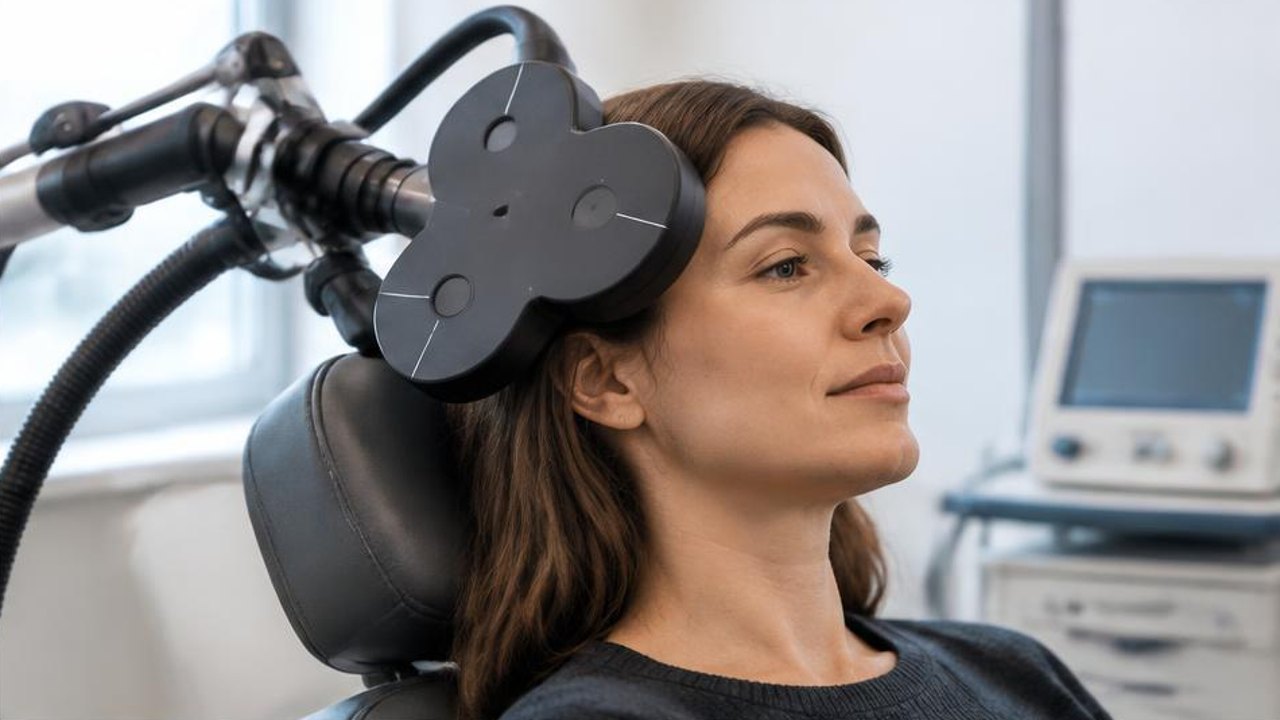
TMS is a family of approaches rather than one identical treatment. Coil designs, stimulation patterns, and treatment schedules differ. Mayo Clinic distinguishes conventional repetitive TMS from deep TMS, while NIMH describes shorter theta-burst stimulation as another approach.
Ask which device and protocol the clinician recommends, what evidence supports it for your condition, and whether the proposed use is within its regulatory indication or off-label. An off-label recommendation should come with a clear explanation of the evidence, uncertainties, alternatives, and financial implications.
Practical fit is not a minor detail
Repeated clinic visits can be a substantial commitment. Before agreeing, ask for the actual appointment schedule and expected course length. Consider travel, work, caregiving, and whether you can reliably attend. If those demands are difficult, explain the problem rather than assuming you must manage it silently.
Also ask who will oversee medication management, how symptoms will be measured, and what happens if treatment does not help enough. These questions help distinguish an individualized care plan from a sales presentation built around a machine.
Candidacy is not a guarantee
Being medically eligible means the team considers treatment reasonable to offer; it does not guarantee response or remission. Ask what improvement would look like for you, when progress will be reviewed, and how ongoing care will be arranged after the initial course.
A useful evaluation should leave you understanding both why TMS is being considered and what remains uncertain. You should have space to ask questions and weigh alternatives before making a decision.
Sources
- Mayo Clinic: TMS indications, risks, and preparation
- NIMH: Brain stimulation therapies
- NIMH: TMS safety screening
Clinical note: Talk with a qualified clinician for an individualized assessment of whether TMS is appropriate for you.
Frequently Asked Questions
- Do you need a depression diagnosis to receive TMS?
- Depression is a major use of TMS, but specific devices and protocols also have other indications. A clinician must evaluate the condition and proposed treatment.
- Does a seizure history automatically rule out TMS?
- A seizure history requires careful specialist review. Eligibility depends on the individual risk assessment and the proposed device and protocol.
- Can an implant affect TMS eligibility?
- Yes. Some metal implants or implanted electronic devices can make treatment unsafe or require device-specific assessment. Provide implant details before treatment.
Written by
TMS News Editorial Team
The TMS News editorial team covers transcranial magnetic stimulation research, treatment access, and patient education, drawing on peer-reviewed studies and leading clinical centers.
 PreviousMeasuring TMS Progress: Why Response and Remission Are Different
 NextMotor Threshold in TMS: A Calibration Measure, Not a Depression Score