
Measuring TMS Progress: Why Response and Remission Are Different
TMS evidence is most useful when the question, measurement and study population are clear. Here is a closer look at measuring TMS progress and the limits that matter when translating research into a clinical conversation.
Response measures change; remission measures remaining symptoms
In depression research, response commonly means a reduction of at least half in a symptom score. Remission means symptoms fall below a defined threshold. Someone can respond substantially while still experiencing meaningful depression. Neither term establishes that work, relationships or enjoyment have fully recovered. Definitions and cutoffs should accompany any success percentage.
Different assessments can tell different stories
A 2012 observational study followed 307 patients across 42 practices using clinician assessments and questionnaires including PHQ-9 and IDS-SR. Outcome rates differed across measures. A 2020 registry likewise examined patient-rated scores and clinician-rated severity. These perspectives are related but not interchangeable. Two people with similar totals can have different difficulties with sleep, concentration or motivation.
Numbers need clinical context
Both publications observed routine treatment rather than randomly assigning participants to active stimulation or a control. The registry involved voluntary site participation and open-label care. Its outcomes cannot establish an individual probability of benefit. Structured ratings are useful records, but daily function and remaining distress deserve attention even when a numerical threshold is crossed.
Questions for a progress discussion
Ask which scale is used, what counts as response or remission and whether everyday goals are improving. Check whether a reported rate includes everyone starting treatment or only those assessed at the end. A clinic percentage is a description of a study population, not a personal forecast. Bring persistent difficulties into the discussion rather than assuming a better total means every important symptom has resolved.
This article is informational, not an individualized treatment recommendation. A qualified clinician can interpret the evidence alongside your diagnosis, history and existing care. Do not alter prescribed treatment based on a study summary.
Sources
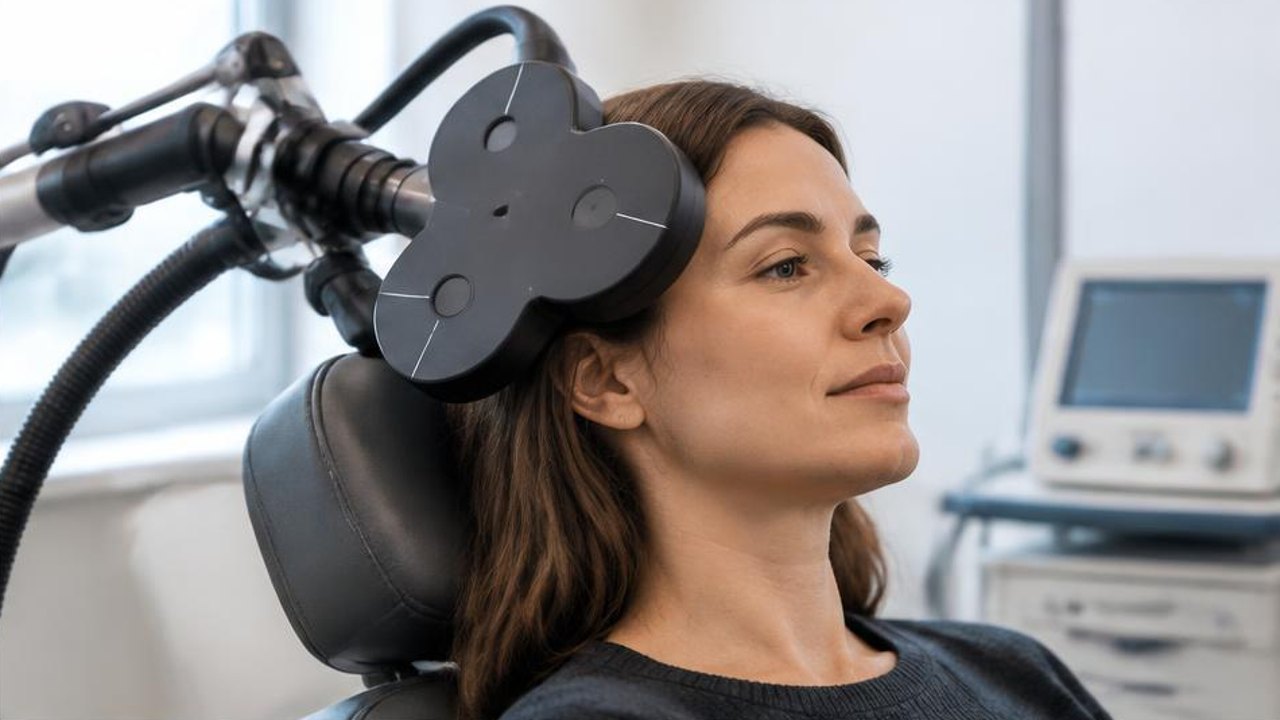
This article is for general information, not individual medical advice. Illustration is AI-generated and does not depict actual study participants.
Frequently Asked Questions
- Response measures change; remission measures remaining symptoms?
- In depression research, response commonly means a reduction of at least half in a symptom score. Remission means symptoms fall below a defined threshold. Someone can respond substantially while still experiencing meaningful depression. Neither term establishes that work, relationships or enjoyment have fully recovered. Definitions and cutoffs should accompany any success percentage.
- What is the main evidence limitation?
- Both publications observed routine treatment rather than randomly assigning participants to active stimulation or a control. The registry involved voluntary site participation and open-label care. Its outcomes cannot establish an individual probability of benefit. Structured ratings are useful records, but daily function and remaining distress deserve attention even when a numerical threshold is crossed.
- What should readers take away?
- Ask which scale is used, what counts as response or remission and whether everyday goals are improving. Check whether a reported rate includes everyone starting treatment or only those assessed at the end. A clinic percentage is a description of a study population, not a personal forecast. Bring persistent difficulties into the discussion rather than assuming a better total means every important symptom has resolved.
Written by
TMS News Editorial Team
The TMS News editorial team covers transcranial magnetic stimulation research, treatment access, and patient education, drawing on peer-reviewed studies and leading clinical centers.
 PreviousMotor Threshold in TMS: A Calibration Measure, Not a Depression Score
 NextWhat Treatment-Resistant Depression Means in TMS Research