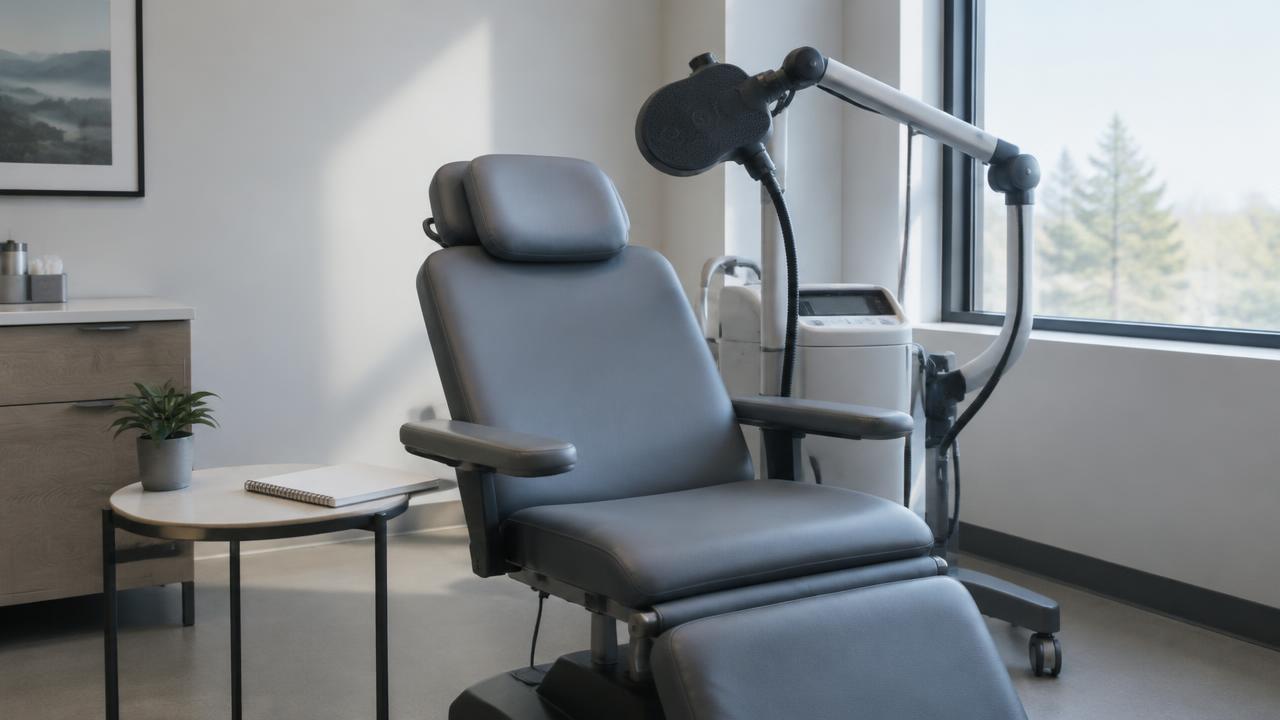
Weekly TMS Matched Lithium on Depression Scores in Maintenance Trial
A 2025 randomized trial shifted attention from whether TMS can improve depression to a different question: how to preserve improvement after an initial course works. The MAINT-R study, published June 16 in JAMA Network Open, compared weekly maintenance TMS with lithium in people who had responded to acute TMS. Researchers found no significant difference in the primary depression-score outcome at 24 weeks.
The finding adds evidence for a specific maintenance approach. It does not establish that TMS and lithium are interchangeable for every patient, nor does it show that ongoing treatment is unnecessary after a successful initial course.
Who entered the trial?
The study involved 75 adults in Japan with treatment-resistant depression who had responded to an acute course of bilateral TMS. Their depression had previously remained moderate to severe despite at least two adequate antidepressant treatments. This was therefore a selected group with demonstrated benefit from TMS, not an unselected sample of everyone seeking depression care.
Participants were assigned to maintenance TMS or lithium. Crucially, they also remained on venlafaxine at the dose used during the acute phase. As the indexed study abstract makes clear, the comparison was not medication-free TMS versus medication-only care with no shared background treatment.
What maintenance treatment involved
The TMS group received 24 weekly sessions targeting the right dorsolateral prefrontal cortex. Stimulation was delivered at 1 Hz, with 900 pulses over 15 minutes per session and intensity set relative to each participant's resting motor threshold. The comparison group received lithium maintenance for the same 24-week period.
These details matter because maintenance TMS is not one standardized package. This trial tested a particular target, frequency, dose, and interval. It cannot directly answer whether monthly sessions, individualized booster visits, or a different coil would produce the same result.
What the outcome means
The primary endpoint was the between-group difference in depression severity at week 24, measured using the Montgomery-Åsberg Depression Rating Scale. The study did not find a significant difference on that outcome. The authors also reported a more favorable adverse-event profile for TMS than for lithium in this trial.
That supports discussion of weekly TMS as a maintenance option for some previous responders. However, a result without a significant difference should not be expanded into a claim that every clinically important difference has been ruled out. Sample size, uncertainty, and the study population still shape the conclusion.
Why the maintenance question matters
Acute treatment and relapse prevention are different clinical tasks. An intervention may improve symptoms during an initial course without establishing how often it should be repeated afterward. MAINT-R is useful because it studied an organized continuation strategy rather than assuming the acute response would simply persist.
For patients, the practical question is not just whether they feel better at the final initial appointment. It is what happens next: how symptoms will be monitored, when reassessment occurs, and what treatment is available if improvement begins to fade. This study supplies evidence for one answer, not a universal rule.
Important limits
The trial was relatively small, followed participants for 24 weeks, and enrolled people who had already responded to bilateral TMS. Its results do not directly establish benefits for people who never responded to an initial course. They also do not settle the best approach over several years.
Background venlafaxine is another important boundary. A headline describing these findings as proof that maintenance TMS eliminates the need for antidepressants would misrepresent the design. The study assessed treatment strategies that both included continued antidepressant medication.
Questions for the next studies
- Which patients benefit most from scheduled maintenance?
- How does weekly treatment compare with other intervals?
- How durable are outcomes beyond six months?
- How do attendance demands and costs affect real-world use?
What patients can take from the finding
If an initial TMS course helps, ask the treating clinician about the follow-up plan before the course ends. Discuss symptom monitoring, medication management, and whether maintenance or retreatment might be appropriate. The MAINT-R schedule should not be copied without considering your own history and available care.
The news is not that relapse prevention has been solved. It is that a randomized comparison gives clinicians and researchers a more concrete starting point for discussing sustained care after a TMS response.
Sources
Frequently Asked Questions
- What did MAINT-R study?
- It compared 24 weeks of weekly right-sided low-frequency TMS with lithium maintenance in 75 people who had responded to an acute TMS course.
- Were participants medication-free?
- No. Participants continued the venlafaxine dose used during the acute treatment phase.
- Does the trial establish the best maintenance schedule?
- No. It tested one weekly protocol in a selected population over 24 weeks, not every possible schedule or long-term strategy.
Written by
TMS News Editorial Team
The TMS News editorial team covers transcranial magnetic stimulation research, treatment access, and patient education, drawing on peer-reviewed studies and leading clinical centers.
 PreviousMeasuring TMS Progress: Why Response and Remission Are Different
 NextMotor Threshold in TMS: A Calibration Measure, Not a Depression Score